WOLVES & HUMANS
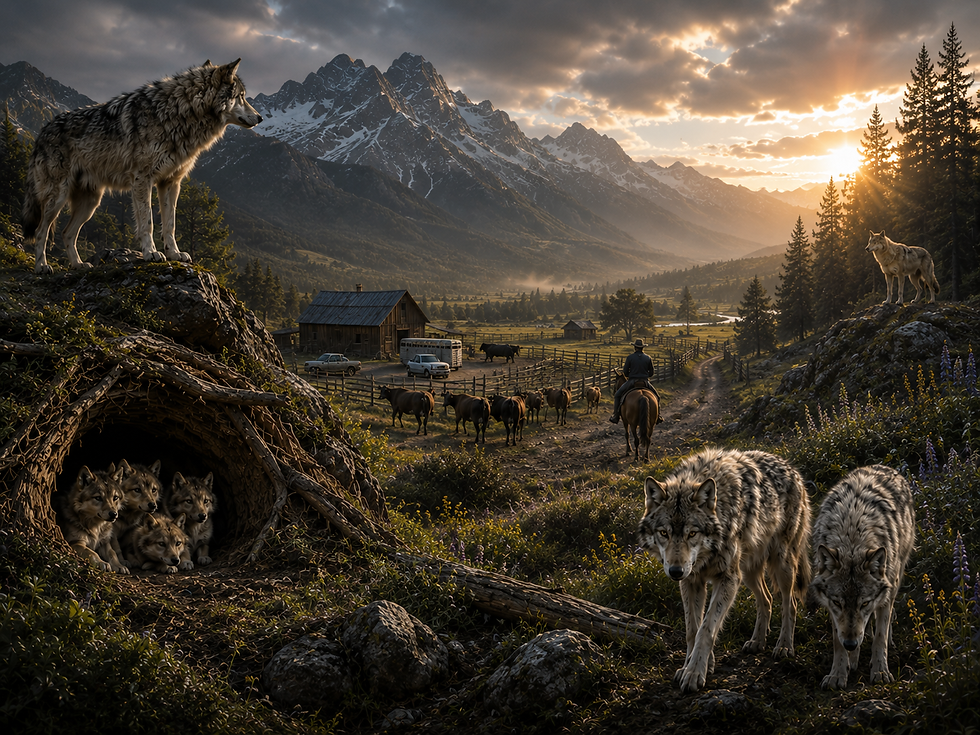
Wolves and humans have shared landscapes for thousands of years. Their relationship has included cultural respect and fascination, but also fear, competition, persecution, livestock conflict, and efforts to conserve and recover wolf populations.
As human settlement expanded, wolves increasingly came into conflict with people, particularly where livestock replaced or supplemented wild prey. In the United States, extensive predator-control campaigns, including shooting, trapping, poisoning, and bounties, contributed to the removal of wolves from much of their former range by the early twentieth century.
Livestock conflict remains one of the most important challenges where wolves and livestock share the same landscape. Wolves occasionally prey on domestic animals, and confirmed losses can create significant economic concerns for livestock producers. Wildlife managers therefore use a variety of approaches to reduce conflict while maintaining wolf populations.
Some conflict-reduction methods are designed to prevent wolves and livestock from coming into contact. Depending on the situation, these can include increased human presence, range riders, fencing and fladry, changing livestock grazing locations, removing carcasses that could attract wolves, and monitoring wolf movements.
Compensation programs can also help address documented livestock losses. These programs do not eliminate the challenges of living with wolves, but they can be one part of broader efforts to support both livestock producers and wolf conservation.
Human safety is another part of coexistence. Wolves are wild animals and should be given space, even though serious attacks on people are extremely uncommon in North America. Preventing wolves from becoming habituated to people or associating humans with food is an important part of keeping both wolves and people safe.
Conservation has changed the story for several wolf populations. Legal protections, habitat conservation, reintroduction programs, captive breeding, monitoring, and cooperation among agencies and communities have helped restore wolves to portions of their former range. The Mexican wolf, for example, was nearly eliminated from the wild before receiving federal protection and beginning a reintroduction program.
Wolf conservation does not look the same everywhere. Different species, subspecies, populations, habitats, laws, and human communities face different circumstances. As of July 2026, federal Endangered Species Act protections for gray wolves in the contiguous United States vary by region, making it important to avoid describing the legal status of all wolves as though it were the same everywhere.
Successful coexistence requires more than simply protecting wolves or removing them from areas where conflict occurs. It can involve science, monitoring, responsible livestock practices, public education, compensation, community involvement, and management strategies designed around local conditions.
The relationship between wolves and humans is therefore complicated, but it is not defined only by conflict. People can and do share landscapes with wolves, and conservation programs increasingly focus on finding practical ways for wildlife, livestock, and communities to exist alongside one another.
Understanding wolves means understanding this relationship from more than one perspective. Wolves are wild predators with legitimate ecological needs, while people living and working in wolf country have legitimate concerns and responsibilities of their own. Finding ways to address both is an important part of the future of wolf conservation.