WOLF COMMUNICATION
Wolves have a complex communication system that allows them to share information, maintain social relationships, coordinate activities, and respond to changes in their environment. They communicate through vocalizations, body language, facial expressions, scent, and physical contact.
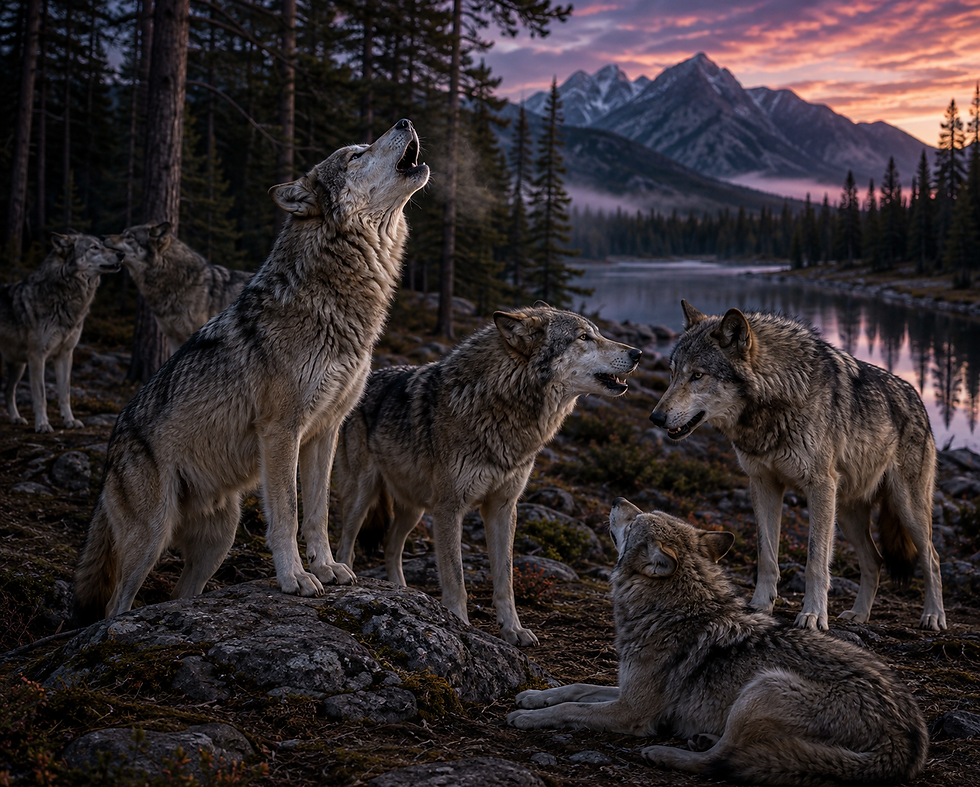
Howling is one of the most recognizable forms of wolf communication. Wolves howl to maintain contact with other pack members, locate one another, gather the group, and communicate across long distances. A howl can also help reinforce social bonds within the pack. Wolves do not simply howl because they are “lonely,” and a single howl can serve several purposes depending on the situation.
Wolves use a variety of other vocalizations as well. Whines, whimpers, growls, barks, and other sounds can communicate different messages or emotional states. Young wolves are particularly vocal when interacting with their parents and siblings.
Body language is equally important. A wolf's posture, tail position, ear position, facial expression, and movement can communicate confidence, submission, excitement, fear, aggression, playfulness, or a desire to avoid conflict.
Facial expressions provide additional information. Wolves may change the position of their ears, eyes, mouth, and lips when interacting with other members of their pack. These subtle signals help wolves understand one another and respond appropriately.
Scent is another major form of communication. Wolves use urine, feces, and scent from glands on their bodies to leave chemical information in their environment. Scent marking can communicate territory ownership and provide information about the identity and reproductive status of the animal that left the mark.
Scent can also help wolves recognize individuals and understand what has recently happened within their surroundings. To a wolf, the landscape contains a constantly changing collection of chemical information.
Physical contact helps strengthen social bonds. Wolves may nuzzle, lick, groom, rub against one another, or rest close together. These behaviors can reinforce relationships and provide reassurance between pack members.
Communication is especially important when wolves are traveling, hunting, defending territory, or caring for young. By combining different types of signals, wolves can coordinate their behavior and respond to one another without relying on a single form of communication.
Wolf communication is therefore much more than howling. Their ability to combine sound, movement, scent, facial expressions, and physical contact creates a sophisticated social language that helps keep the pack connected.