STEPPE WOLF — Canis lupus campestris
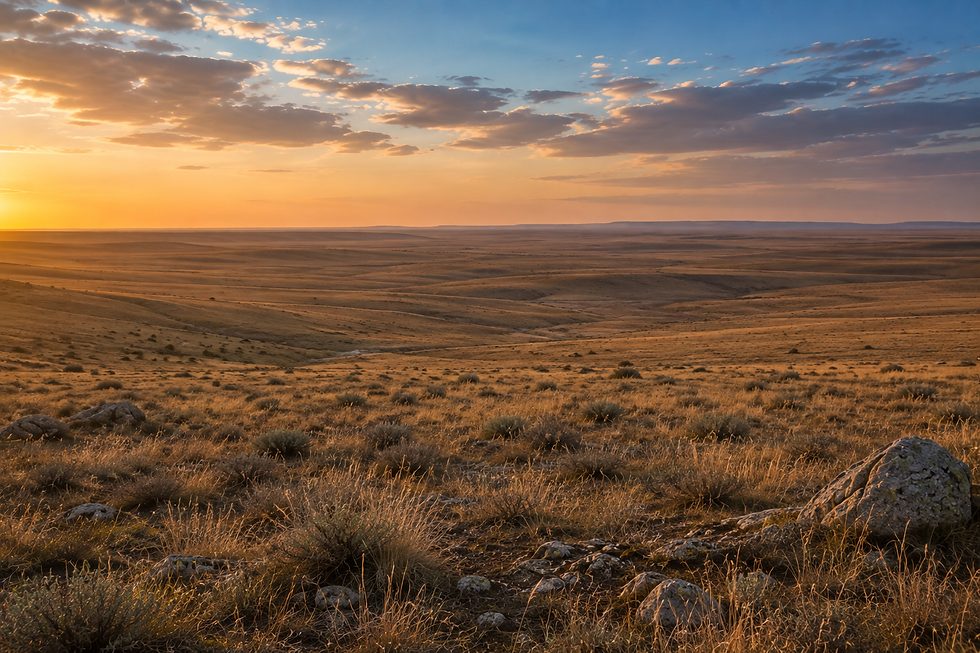
The Steppe Wolf is a form of the gray wolf associated with the open steppes, semi-deserts, and arid landscapes of Eurasia, particularly around the Caspian region, southern Russia, and Kazakhstan. It is currently listed in taxonomic databases as Canis lupus campestris, a subspecies of the gray wolf. The open landscapes it inhabits can be enormous and sparsely vegetated, requiring wolves to travel considerable distances in search of prey and water.
Unlike wolves living in dense forests, Steppe Wolves are adapted to wide-open country where visibility is high and prey may be widely dispersed. Their diet varies with location and season and can include hoofed animals, smaller mammals, birds, and carrion. Some individuals remain relatively local, while others move with migrating or widely distributed ungulates.
SPECIAL DETAILS
APPEARANCE
Steppe Wolves generally have a leaner, more lightly built appearance than many northern gray wolves. Their coats tend toward gray, brown, sandy, and ochre tones, which provide useful camouflage in dry grasslands and semi-desert environments.
HABITAT & RANGE
Their traditional range centers on the Eurasian steppes and surrounding dry regions, including Kazakhstan, southern Russia, the Caspian region, and parts of the Caucasus. These landscapes can include grasslands, semi-deserts, dry plains, and sparsely vegetated areas.
DIET
Steppe Wolves are opportunistic predators. Their food depends heavily on what is available locally and may include hoofed mammals, saiga and other ungulates, hares, rodents, birds, and carrion. Where large prey is abundant, wolves can follow or move in response to its distribution.
SOCIAL LIFE
Like other gray wolves, Steppe Wolves are social animals that can live in family-based packs, although individuals may also travel alone or in smaller groups. Pack living allows wolves to cooperate in traveling, defending territory, raising young, and hunting prey.
WHAT MAKES THE STEPPE WOLF SPECIAL?
The Steppe Wolf is built for life in open country. Instead of relying on dense forests or mountainous terrain for cover, it survives across enormous landscapes where food and water may be scattered far apart. Its adaptability, endurance, and ability to exploit different prey make it well suited to the demanding Eurasian steppe. Kazakhstan contains some of the world's largest remaining expanses of relatively intact steppe habitat, making it particularly important for wolves associated with this ecosystem.
SUMMARIZED FACTS
-
Scientific name: Canis lupus campestris
-
Common name: Steppe Wolf
-
Family: Canidae
-
Classification: Gray wolf subspecies
-
Range: Eurasian steppes, including Kazakhstan, southern Russia, and the Caspian region
-
Habitat: Steppes, grasslands, semi-deserts, and dry open plains
-
Coat: Generally gray, brown, sandy, or ochre
-
Diet: Ungulates, smaller mammals, birds, carrion, and other available prey
-
Social structure: Family-based packs, with solitary individuals also occurring
-
Key adaptation: Endurance and adaptability in vast, open environments
-
Movement: Some individuals may move extensively in response to prey availability
-
Notable feature: Specialized for life across the open Eurasian steppe
Back
Home
