SPECIAL DETAILS
APPEARANCE
The Iberian wolf is known for its distinctive coat markings. Its body is usually brownish or grayish, with darker fur along the back and tail. White or pale markings around the cheeks and muzzle contrast with darker facial areas, while a characteristic dark stripe runs along the front of each foreleg.
HABITAT & RANGE
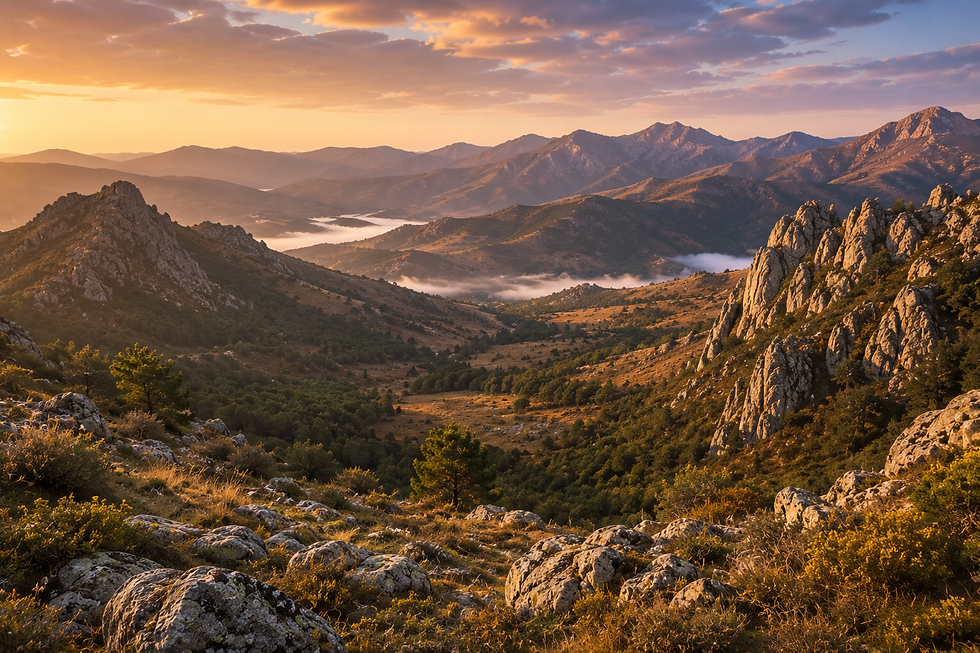
Iberian wolves occur mainly across northwestern Spain and northern Portugal, with populations extending into additional areas of north-central Spain. They use mountains, forests, open woodland, and adjacent agricultural landscapes.
DIET
They are opportunistic carnivores whose diet varies by region. Important prey includes roe deer, red deer, wild boar, rabbits, and other mammals. Studies in northeastern Portugal have found wild ungulates to be particularly important, while livestock can become significant in landscapes where domestic animals are readily available.
SOCIAL LIFE
Iberian wolves live in small, family-based packs. Pack size can vary with season and food availability, with smaller groups being common. Members cooperate in activities such as movement, territory defense, communication, and raising young.
WHAT MAKES THE IBERIAN WOLF SPECIAL?
The Iberian wolf's most obvious distinction is its unique coat pattern, but there is more to it than appearance. Genetic research has confirmed that Iberian wolves possess distinctive genetic diversity within the gray-wolf species, representing an important evolutionary lineage of Canis lupus.
It has also demonstrated considerable adaptability. Iberian wolves can live in landscapes influenced by people, using forests, mountains, open areas, and agricultural regions while maintaining their social structure and hunting behavior.
SUMMARIZED FACTS
-
Scientific name: Canis lupus signatus
-
Common name: Iberian Wolf / Spanish Wolf
-
Family: Canidae
-
Classification: Gray wolf subspecies
-
Range: Iberian Peninsula, primarily Spain and Portugal
-
Habitat: Mountains, forests, open woodland, and surrounding landscapes
-
Coat: Brown, gray, yellowish, and black
-
Distinctive markings: Dark foreleg stripes, dark dorsal coloration, and pale facial markings
-
Diet: Roe deer, red deer, wild boar, rabbits, other mammals, and occasionally livestock
-
Social structure: Small family-based packs
-
Key characteristic: Distinctive genetic lineage within the gray wolf
-
Notable adaptation: Ability to use a variety of natural and human-influenced landscapes
Back
Home
IBERIAN WOLF — Canis lupus signatus
The Iberian wolf is a distinctive subspecies of the gray wolf found on the Iberian Peninsula, primarily in northern and northwestern Spain and northern Portugal. It is a relatively slender wolf with long, fine legs, a strong head and neck, and a coat ranging from yellowish-brown and gray to darker brown and black. Its most recognizable feature is its pattern of dark markings, including a distinctive dark stripe along the front of the forelegs and darker coloration across the back and tail.
Iberian wolves are adaptable predators that live in mountainous forests, open woodland, and surrounding landscapes. They generally live in small family packs and hunt a variety of prey. Depending on the region, their diet can include wild boar, roe deer, red deer, rabbits, and other mammals, while livestock may also become part of their diet where wild prey is limited or human activity is high.
